
How Young Is Too Young for a Cargo Bike?
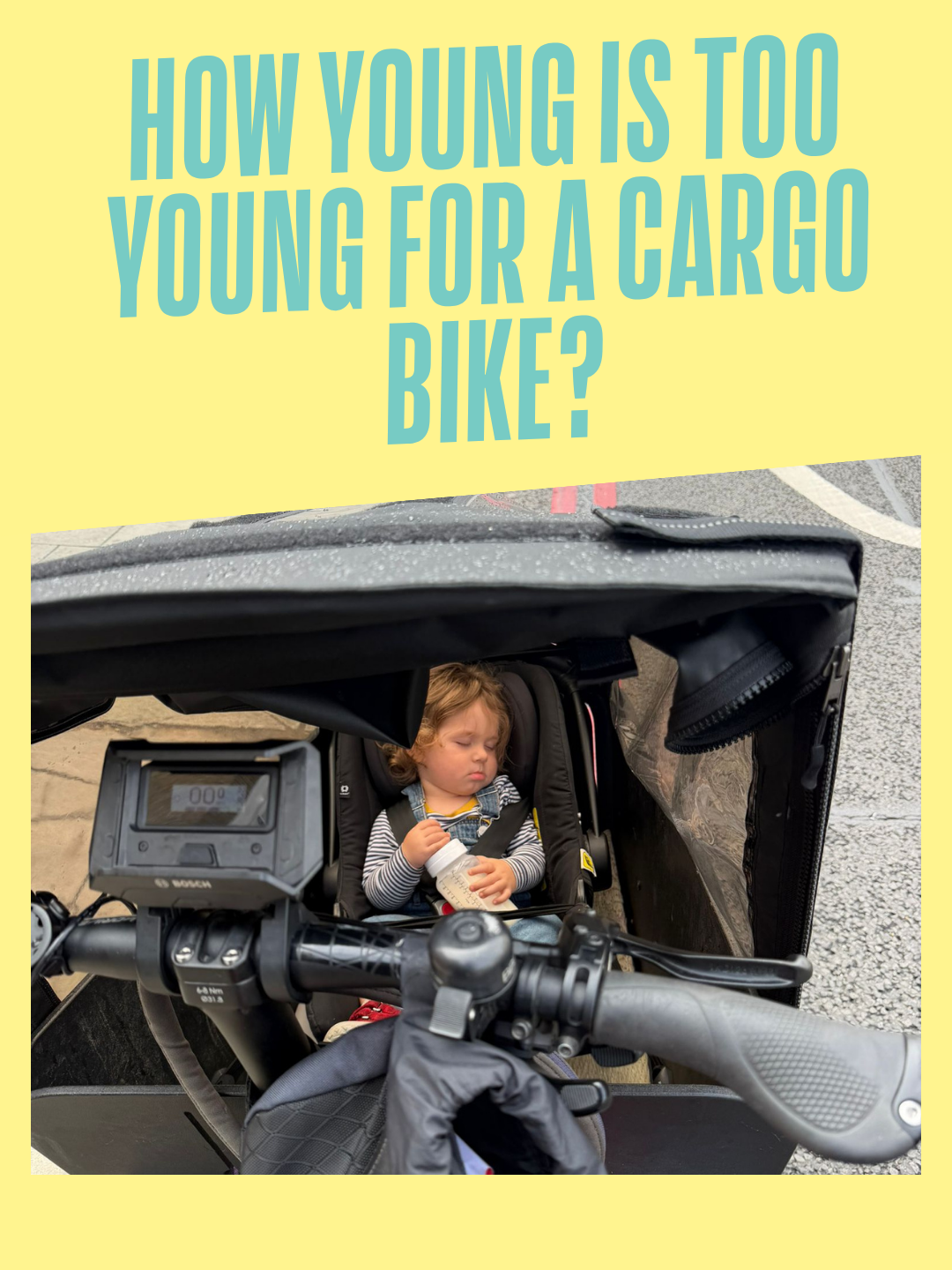
At the Cargo Collective, one of the questions we are asked most often is: When can we start? Many parents are eager to get a cargo bike but are unsure how young is too young for a baby to come on board.
We began by looking for the legal minimum age for carrying a child by bike in the UK, and soon discovered that there isn’t one. Opinions within our community also vary considerably. Some members started using a front-loader when their baby was three months old, while others waited until nine months to use a longtail. General guidance for carrying a baby by bike, meanwhile, often recommends waiting until around 12 months.
To understand the reasons behind these timelines - and whether different cargo bikes require a different approach - we spoke to Hannah Spink, paediatric physiotherapist at Bumble Bee Physio and a member of our Collective. She explains the key things parents should consider before taking a baby on a cargo bike.
The 12-Month Blanket Rule: Myth or Reality?
The recommendation to wait a year before cycling with your baby is rooted in the design of traditional bicycles.
Standard child bike seats are upright and mounted on the back (or sometimes the front) of a regular bike. As Hannah explains, riding a standard bike involves "high speed and thin wheels," meaning any shock from a drain or pothole travels directly up to the baby.
"Sitting up on a bike means you need spinal trunk strength to withstand all the bumps," says Hannah. “Because an infant's muscles are not fully developed, they can’t control their spine or keep it aligned, so they are vulnerable to these micro-jolts.”
But cargo bikes, with their heavier frames, specialised suspension, and box designs, could be an entirely different beast.
The Early Months: Lying Flat and Absorbing Force
When carrying a baby under six months, the focus shifts entirely from core strength to vibration management. At this stage, babies cannot sit up, so they need to be lying flat or fully supported in an infant car seat or specialised cargo bike baby seat.
Hannah notes that while a car absorbs the impact of the road with four huge wheels and heavy suspension, a bike requires parents to be much more intentional about protecting a baby’s developing spine.
“The younger they are, the more support they need for their spine alignment," she explains. "This means ensuring your cargo bike has good suspension, and placing the baby in a secure, snug environment such as a car seat or specialised baby bike seat with an adapter, if needed - these can come with additional suspension."
The baby seat’s insert needs to keep the baby completely stationary: “You don’t want any movement of the baby within the seat; the insert mimics the deep bucket of a car seat, keeping your baby fully supported at all times.”
Navigating Options
The right seating setup depends entirely on the style of your bike:
Front-Loaders: These offer a distinct advantage for infants. Often featuring front suspension, when equipped with infant car seats or specialised baby shells (like Melia seats), the baby is protected by the roll-cage effect of the wooden or EPS foam cargo box and the impact-absorbing shell of the seat itself. Melia seats, for instance, feature extended sides all the way up to the baby’s head to protect from side impacts.
Longtails: While compact and familiar to ride, standard longtails generally lack rear suspension, meaning bumps transmit more directly over the rear wheel. To safely carry an infant, an option is to install an adapter with a built-in sprung, tensioned frame, such as the Steco Baby Mee, which holds a car seat securely while absorbing shocks. Many longtail riders also install a handlebar mirror to easily keep an eye on their rear-facing baby.
Helmet: Yes or No?
One of the biggest practical reasons for the traditional 12-month rule is head protection. Standard bicycle helmets are simply not manufactured for infants under 9 to 12 months old - and for good medical reasons.
Helmets are designed for sitting toddlers and children, not for a lying or semi-lying position. Even if a helmet small enough existed, a young baby’s neck muscles are not developed enough to support the added weight while absorbing the motion of a ride.
More importantly, putting a helmet on a baby in a reclined seat can be dangerous. “Babies in a ‘flexed position' are already at a greater risk of flexion asphyxiation,” Hannah warns. Because all helmets are made of thick protective material, wearing one pushes the baby’s chin down toward their chest, adding a few centimetres of unnatural flexion to their neck and increasing this risk further. (While some baby helmets claim to have a ‘flat back’ for naps, they still protrude further than a bare head).
Therefore, when babies are in the 0-9 month range, the insert or car seat they sit in is designed to protect them without a helmet. Making sure the baby is properly strapped in, and that their seat is fastened securely to the bike, is the safest setup. Once a baby is old enough to sit completely upright on a bench seat, they can and should wear a properly fitted helmet.
The Ergonomic Advantage Over Cars
One of the most fascinating insights from a physiotherapist's perspective is that once a baby is old enough to sit up, a cargo bike is actually better for their physical development than a car.
Infants shouldn't be left in car seats for long periods. Guidelines suggest no more than one to two hours, as the flexed position can restrict their airways, and the deep bucket seat leaves them completely passive and restrained.
A cargo bike bench seat, on the other hand, encourages active development.
"If they're sitting in a 90-degree angle seat with a five-point harness, they're going to be working their core a little bit, working all their trunk muscles," Hannah points out. "Being able to look out, turn their head, and turn their body... they're actually working muscles to sit, because it's a new thing for them, and it's exercise."
In a car seat, they are passive. On a cargo bike, they are engaging with the world and building strength.
Top Tips for Cycling with an Infant
If you are ready to start pedalling with your little one, keep these core principles in mind:
Pace yourself: Speed magnifies bumps. As Hannah advises, "Go slowly, especially over bumps, just because their spine has really low muscle tone."
Mimic the car seat fit: Whether using a specialised baby shell or a car seat, ensure the baby is strapped tightly into the insert, and the insert is strapped tightly to the bike. There should be zero sliding.
Prioritise the flat position for newborns: Until they have the neck and core strength to sit unsupported (usually around 9 months), babies must be in a reclined, supported setup. Most car seats come with a newborn insert that makes the seat shallower and flatter for tiny babies.
Check your route: A cargo bike outfitted with the right infant suspension is incredibly safe, but stick to smooth paths, low-traffic areas, and protected cycleways while they are tiny to minimise jolts.
Start with short rides: A 15-minute ride may be plenty for an infant at first, so begin with brief trips and observe how your baby responds. “The great thing about a cargo bike is that you’re close enough to monitor how they’re doing,” Hannah says. You may even discover that they find travelling by cargo bike particularly soothing!
So, when can we start? Ultimately, there is no magic calendar date. Deciding when to start is a personal choice, balancing smart safety measures, a baby’s development, bike’s capabilities, and your own confidence.
